Assistant Professor, Docent · Linköping University, Sweden
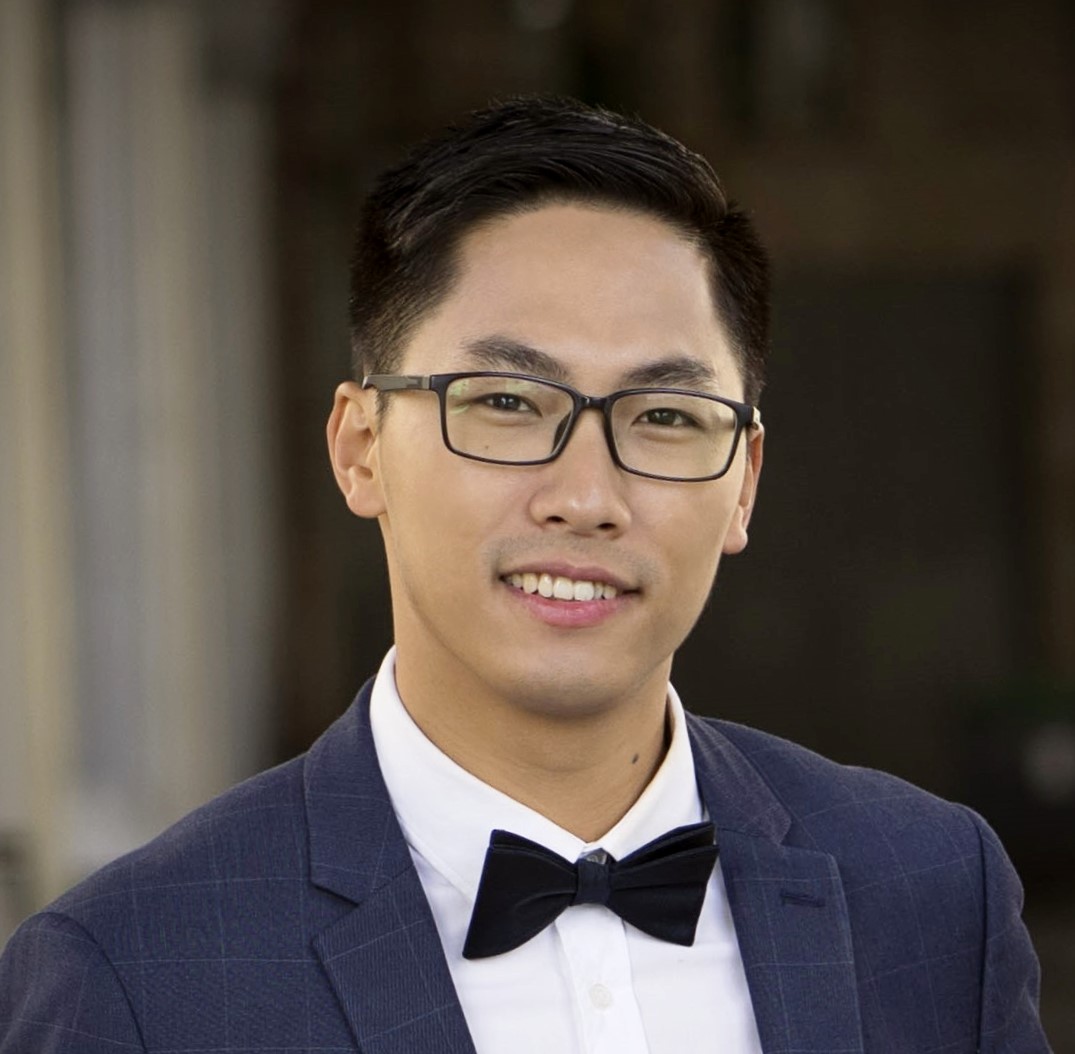
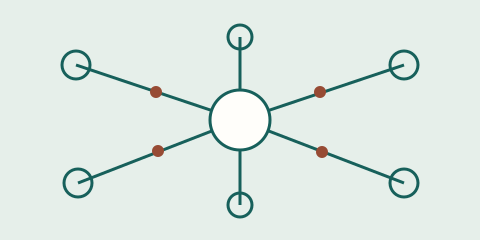
I’m Khac-Hoang Ngo, an Assistant Professor and Docent in Electrical Engineering at Linköping University. I study how connected systems share information, learn, and make decisions in an efficient, reliable, and trustworthy manner.
Wireless communications · Information theory · AI privacy and security
Previously, I was a postdoctoral researcher at Chalmers and earned my PhD at CentraleSupélec, Paris-Saclay University. I'm a Vietnamese, married, with a little daughter. Full CV ↗
Khac-Hoang NgoCommunications · Information · Learning
Find me online
News
Welcome Lorenzo Sucameli, PhD student, to my research team at LiU. He will work on memory poisoning in LLM agents, in a VR-funded project.
Assoc. Prof. Laura-Maria Dogariu (Politehnica Bucharest, Romania) visits me for a week at LiU.
I presented as an ELLIIT Recruited Faculty in the ELLIIT Annual Workshop 2026 at Lund University. Watch a recorded version of my presentation, ‘Communicating what is needed, and just that’. Watch presentation
I was awarded a VR Starting Grant for my project ‘Communication-Efficient Synchronization of Predictions for Distributed Intelligent Systems (CESP)’. A PhD student will be recruited.
I attended the 13th Heidelberg Laureate Forum as an alumnus. It is as inspiring as always. A major theme is AI in research, especially in math.
Earlier updates
I gave my Docent Lecture, ‘Unsourced Multiple Access for Massive Connectivity: from Support Recovery to Type Estimation,’ on June 5.
Our paper on distributed MIMO with over-the-air phase calibration was accepted to IEEE Transactions on Wireless Communications. Paper
Dr. Alejandro Lancho (Universidad Carlos III de Madrid) visited me at LiU.
New preprint: type-based unsourced multiple access over fading channels in distributed MIMO, with application to multi-target localization. Preprint
I was appointed Chair of the IEEE Information Theory Society Student & Outreach Subcommittee.
‘Type-Based Unsourced Federated Learning With Client Self-Selection’ was accepted to IEEE ICC 2026. Paper
‘MATTER: Multiscale Attention for Registration Error Regression’ was accepted to IEEE ICASSP 2026. Paper
Our review of noncoherent MIMO communications was accepted by IEEE Open Journal of Vehicular Technology. Paper
Awarded SEK 6 million from the Swedish Research Council for ‘Memory Poisoning in LLM Agents: Foundations, Attacks, and Defenses,’ with Alexandre Graell i Amat and Johan Östman.
I presented a tutorial on unsourced multiple access, from support recovery to type estimation, at the Swedish Communication Technologies Workshop.
‘Practical Bayes-Optimal Membership Inference Attacks’ was accepted to NeurIPS 2025. Paper
Two papers were accepted to IEEE GLOBECOM 2025: information age and correctness with energy harvesting, and over-the-air phase synchronization in distributed antenna systems. Publications
I received the 2024 Golden Globe Science and Technology Award in Vietnam.
I will soon recruit a PhD student for my VR Starting project, ‘Communication-Efficient Synchronization of Predictions for Distributed Intelligent Systems (CESP)’.
I support, as the Swedish host, candidates for the Wallenberg-NTU Presidential Postdoctoral Fellowship. It provides one year of postdoctoral research in Sweden and one year at NTU Singapore. If you are interested in scalable and secure distributed intelligence, feel free to contact me with your CV, and we can explore this opportunity together. Application deadline: December 31, 2026.
I support applications for the MSCA Postdoctoral Fellowship. I received this fellowship in 2021. Next deadline: September 8, 2027.
Research directions: scalable and secure distributed inference
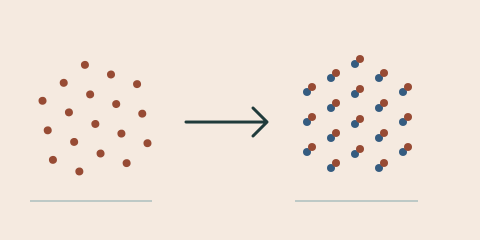
I explore point-cloud transmission for remote registration: communicating with a downstream task in mind, rather than treating every bit as equally important.
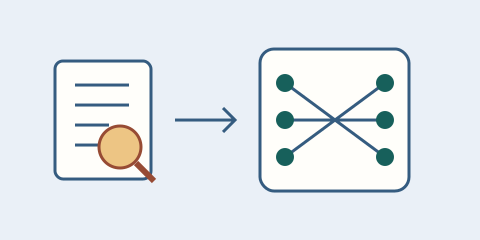
I investigate privacy risks in learning systems and the foundations of attacks and defenses, including membership inference and memory poisoning in AI agents.
Have a question that connects to my work? I welcome conversations with researchers, students, and practitioners—from an early idea to a concrete research problem.
Discuss research ideas
Share a question, a paper, or a result you think we should discuss.